🌲 On National Public Lands Day, Stand Up for Public Lands Counties - Letter From the Editor
Today, September 26th, is National Public Lands Day. Four days from now the law behind Secure Rural Schools, a lifeline for our Public Lands Counties, was written to run out. Here's why that deadline matters to anyone who loves public land, and the call I hope you'll make.
Enjoy the audio edition on Buzzsprout, or look for "Open Gorge" wherever you get your podcasts.
Dear Reader,
September 26 is National Public Lands Day, the biggest single day of volunteer work on public land in the country. People will be pulling ivy, fixing trail tread and picking up after the summer crowds. I love this day. And so in this spirit of shared generosity and service, I want to ask you for one phone call to secure the future of these beautiful places. Please join me in standing up for the communities who care for these lands every day.
Four days from now on September 30, the law behind Secure Rural Schools, a critical lifeline for Public Lands Counties, was written to run out. Congress has so far failed to introduce a bill for its extension, and now is the time to act.
Here in Skamania County, public land isn't a place we visit; it's part of our neighborhood. Nearly 80 percent of the county is managed by the federal government, most of it the Gifford Pinchot National Forest. By our Assessor's count, just 1.4 percent of the land can be taxed at full market value.
Secure Rural Schools is the federal promise that stands in for the property taxes a national forest can't pay. Here it keeps roads open, schools running, firefighting and emergency services at the ready, and search and rescue crews on the mountain. The last check this law promises arrives in the spring of 2027. After that, unless Congress acts, the county falls back on a deal written in 1908, one that never predicted the ecological and economic realities of the world we live in today.
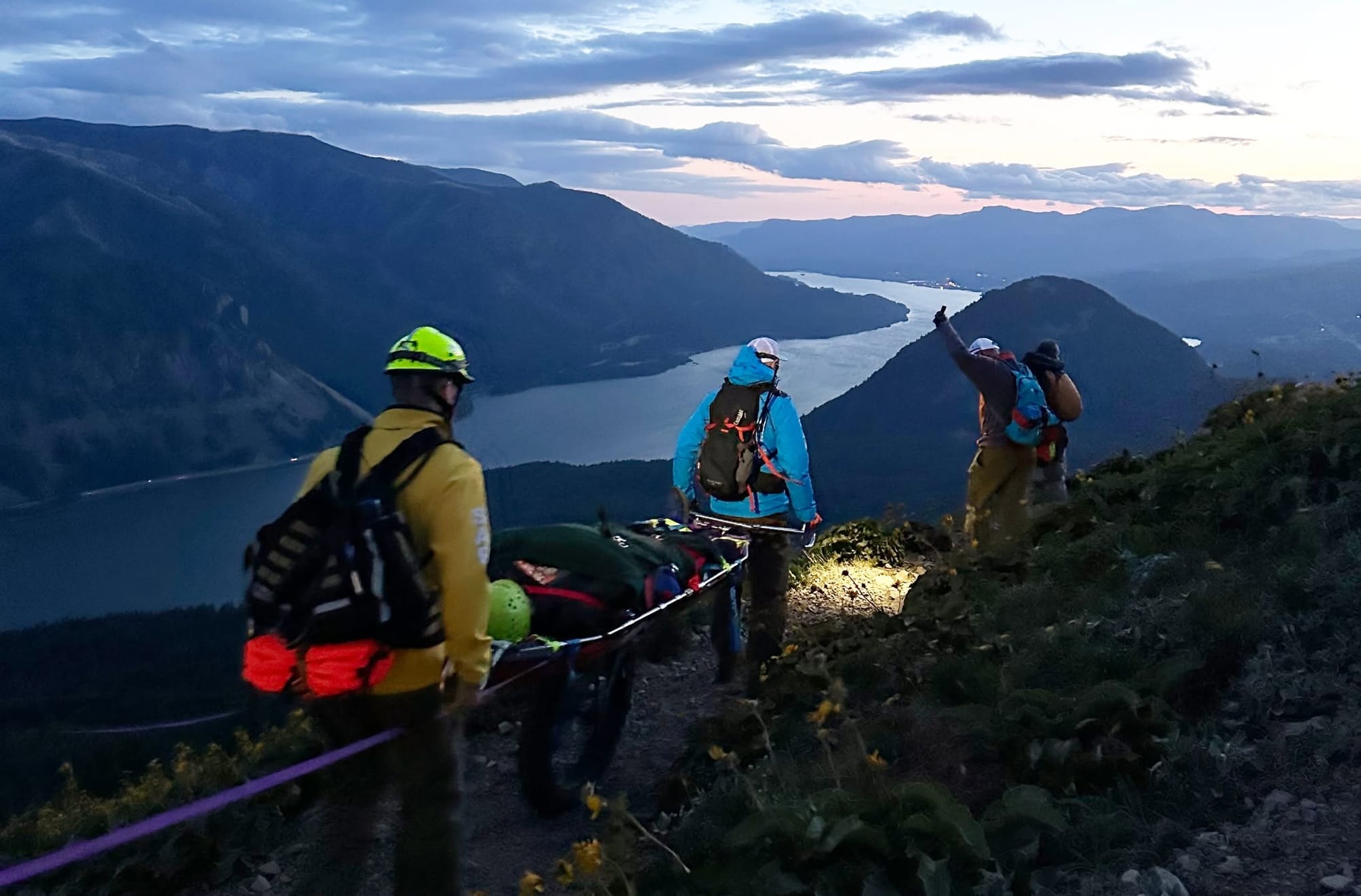
We know what that looks like, because we just lived it. The SRS program lapsed in October 2023, and Congress took more than two years to fix it. That year Secure Rural Schools would have paid Skamania County about $2.35 million. The 1908 share paid about $448,000. Nineteen cents on the dollar. The Stevenson-Carson School District's forest money fell from about $811,000 to about $158,000 in a single year, and the lost money was one of the reasons its board gave for closing Wind River Middle School in Carson. With nothing but carry-over to spend, the county's first search and rescue grant that year was $11,519.
That's one blade of what I've been calling the Levy Scissors. The other is state law. Since 2001, Washington has let a county's property tax revenue grow just 1 percent a year, while costs like insurance, fuel, fire trucks, and road repair climbs much faster. InvestigateWest has reported what that does to counties all over the state. Because of this law, the counties cannot raise their own taxes to cover this gap without a special vote. They become locked into structural deficits, budgets grinding down from year after year of rising costs of 4-6% inflation (or more). Oregon's tax levy caps, although differently-structured, have come to have the same devastating impact on their Public Lands Counties too.
Put a county between those blades and it starts to make decisions out of survival. It reaches for the next big project: a mine, a timber sale, a data center, any new source of revenue. It cuts the road crew, the public health nurse, a deputy. From far away, some of those choices can look like an attack on the land. Up close, they usually look like a small board trying to keep the school bus running.
So here is what I'm asking:
Call your U.S. Representative and both your Senators, and ask them to renew Secure Rural Schools.
You can find your Representative by ZIP code and your Senators by state. Tell them you love our public lands, and that the counties who care for them can't keep doing that on a program Congress lets lapse. Then ask for something better: a permanent fix, so no county has to hold its breath like this again.
If you live in Portland or Seattle or anywhere far from a national forest, please don't skip this. Your call matters as much as ours. Public land belongs to all of us, and so does the 1908 promise that came with it.
And carry one small practice with you after the call. The next time you read something that upsets you, something that feels like an attack on a national monument, a forest, a National Scenic Area, a park, look up the county it's in. Check how much of it is public land and what the federal government pays it. Then get curious about what else is going on there. Is a school closing? Did the sheriff lose a position? Is search and rescue buying gear out of a shrinking grant?
The people who live in these places love the land as much as anyone. They work it. They fight its fires. They go up the mountain in the middle of the night for the hiker who didn't come home. They need steady support to be strong enough to defend the land.
A Permanent Fix: a Permanent Trust
The good news is that the permanent fix isn't a fantasy. The National Association of Counties now runs a National Center for Public Lands Counties, because this isn't a Western oddity: 62 percent of American counties have federal land inside their borders, including every county in the Columbia Gorge National Scenic Area. And Headwaters Economics has made the case for endowing public land counties with a permanent trust, built from the receipts public lands already earn, invested and paid out each year so the principal is never spent. Instead of a check that Congress can let lapse, a county would get a payment it can plan around. The Center for American Progress picked up that thread in 2024, and Skamania was one of its case studies.
Renewing Secure Rural Schools keeps the lights on. A permanent fund would let a county plan, and a county that can plan is a county that can say no to a bad deal, that can protect these critical ecosystems on the front lines of climate change.
When I started the Levy Scissors series, I kept coming back to one sentence, and it's the one I want to leave you with this National Public Lands Day.
We can only treat the land as well as we treat each other.
Thank you for reading, for volunteering, and for making the call.
— Kate