✂️ The Levy Scissors: Rural America's Fiscal Case
Sit through enough meetings in the Gorge and you hear the same thing: there isn't enough money. Why? State law caps how fast county tax revenue can grow, and public land pays no property tax. Our ongoing series on the arithmetic under every mine, timber sale, and data center.
Every week I pull up the latest public meetings across Skamania and Klickitat counties, pour a cup of coffee, and set to work. I gather the hundreds of pages of packets, transcribe what was actually said, and distill the decisions, themes, and people into this newsletter.
As the weeks turned into months, the same phrases came up in every single meeting: emergency repairs, unexpected expenses, unfunded mandates. Every agency was up against the same costs: insurance rate hikes, soaring construction costs, aging infrastructure coming due. As a resident and a taxpayer, I felt a squeeze in my chest every time I heard the strain in our public servants' voices as they tried to absorb yet another cost. And one question kept surfacing: if we're losing, who is winning?
So I went looking for the winners. Is there a rural county anywhere in the country that is actually solvent? Did any survive the decline of the industry they were built on, like timber? What did they do to right the ship?
The picture that emerged was starker than I expected. It's what this whole series sets out to show, and it's where the name Levy Scissors comes from: one blade is state law, the other is federal land.

Across the country, state laws cap how fast county property-tax revenue may grow, usually below the rate costs actually rise. Public-lands counties feel it from two directions: most of their land pays no property tax at all, and the federal payments meant to stand in for it lapse and shrink. Cornered, counties often reach for the one thing that adds to the tax base overnight: the next big project.
Every proposal that comes before us, from mines to timber sales to data centers, sits downstream of this invisible plumbing, the pipes that barely keep our most essential services running. It's tempting to assume there is a bigger scheme behind it all, some corruption or conspiracy. What I've mostly found is survival: paying for schools, public health, roads, search and rescue. And it's corroborated by reporting like this piece in InvestigateWest, in which one administrator from neighboring Franklin County notes:
“The financial system is collapsing, and we in the counties have been left to hold the bag... We're collapsing and the state is not doing anything about it but waiting and watching the system implode.”
My goal is to make this plumbing visible, so we can have better conversations about how to protect people, the land, and our future together. I want to see us collaborate across counties to make ourselves heard, and I hope this reporting can be part of that regional solution.
After all, we can only treat the land as well as we treat each other.
Pieces in our Levy Scissors fiscal case series, so far:
 Dispatch Squatch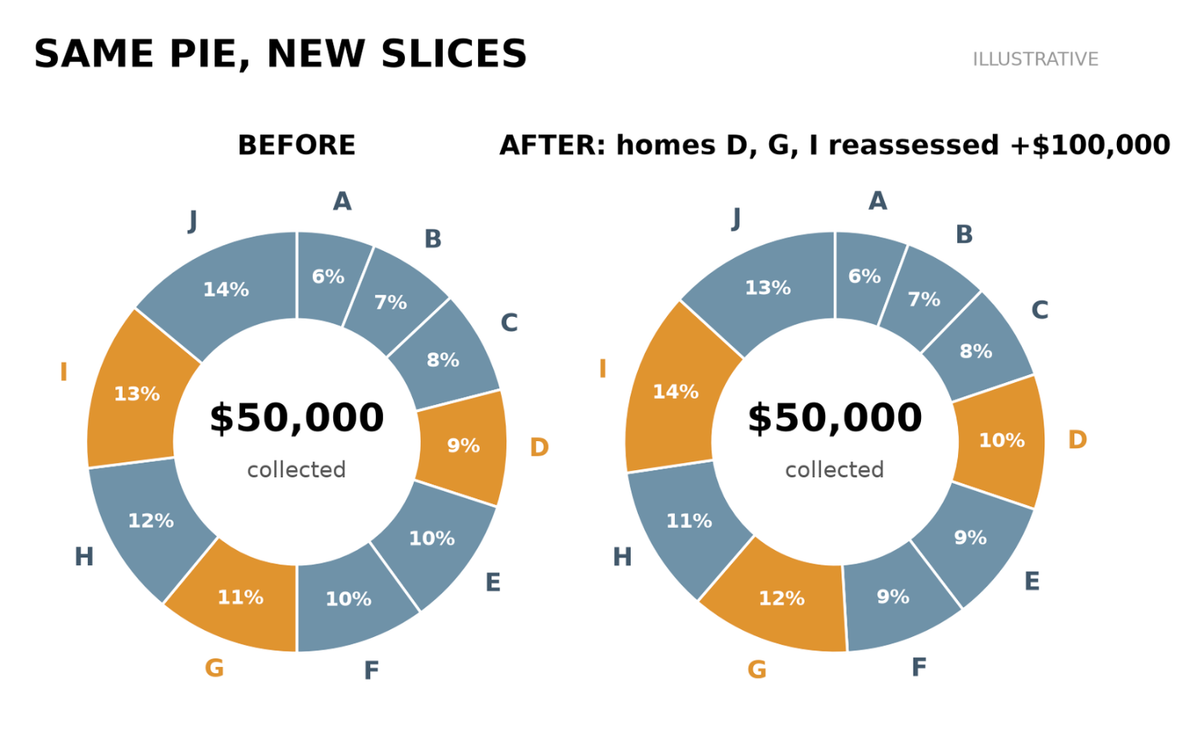
 Dispatch Squatch
 Dispatch Squatch
Scroll to "✂️ Editor's Analysis: the Arithmetic Behind Data Center Decisionmaking"