⛴️ The Ferryman's Secret: a Halloween Tale from 1910 Underwood
Before the bridge, Underwood's road to the world was a boat. Meet the ferrymen, from Amos Underwood's salmon sailboats to Otis Treiber, and the stormy night around 1910 that ended with a still unsolved mystery.
Enjoy the audio edition on Buzzsprout, or look for "Open Gorge" wherever you get your podcasts.
🕯️ Halloween Special: "Ote, Where's Lundy?"
Where and When: Underwood and Hood River, across the Columbia, from the 1800s to the 1920s. The night at the center of it was about 1910.
The Bottom Line: For decades the only way from Underwood across to Hood River was a ferry. One of its captains, Otis Treiber, kept quiet about the night a friend vanished. In 1978 he told the story to a tape recorder.
The Vibe: A storm, a lantern, a dark river and a man who walked up the beach and never came back. No ghosts. Just the record, and one ferryman's memory.
Before the bridge, the river was the road
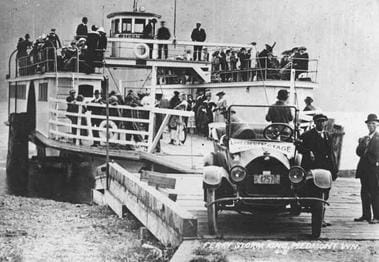
Today you can drive from Underwood to Hood River in a few minutes. Until the end of 1924 you couldn't. The Hood River-White Salmon bridge opened on December 6, 1924, and it ended the ferry business.
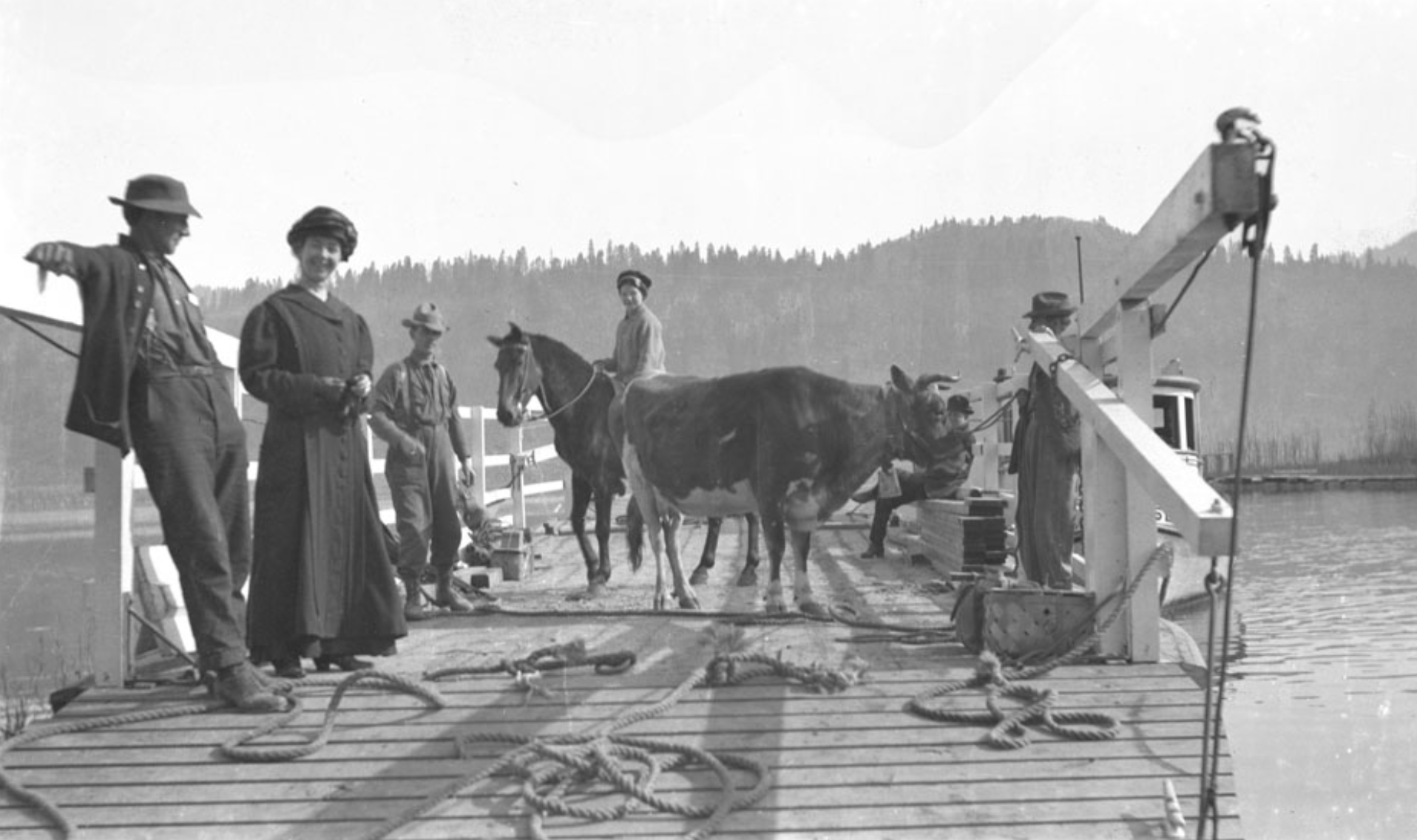
Before that, from the 1850s on, ferries of every kind crossed between Hood River and the Washington shore. If you wanted to move a cart, a cow or a chicken across the Columbia, you paid a ferryman. At the Hood River landing, a sign on a fence post read "Underwood Ferry."
The earliest Underwood ferry was for fish
Long before any ferryman, this stretch of the river was a crossing and gathering place for the Indigenous peoples of the Gorge, and it still is.
The earliest Underwood ferry we can find was run by Amos Underwood, the man the town is named for. In 1907 the Skamania County Pioneer said "Uncle Amos" had settled at the mouth of the White Salmon River when it was a favorite camping place for many Native people, and had later run a ferry at Underwood.
His boats had no engines. Hood River old-timer Eph Winans, remembering in 1949, said Amos sailed the crossing in what were really just salmon boats. His son-in-law, Captain Harry Olsen, later brought in a steam tug.
A few miles upriver, another ferry ran between Hood River and the White Salmon and Bingen side. That one had its own long line of captains. One of them, "Commodore" O.C. Dean, ran the ferry Panama, which charged two dollars, round trip, for a car and driver in 1915.
Otis Treiber's floating world
The Underwood run passed to a young man named Otis Treiber. A caption in the Columbia Gorge Museum's copy of his interview says he bought the ferry from Harry Olsen and ran it from 1905 to 1920.
Otis lived on the water. He batched on an old houseboat at the mouth of the White Salmon until he built another one and married a girl from Kansas he'd known since he was about nine. She was a grade ahead of him in school, and her brother was the teacher.
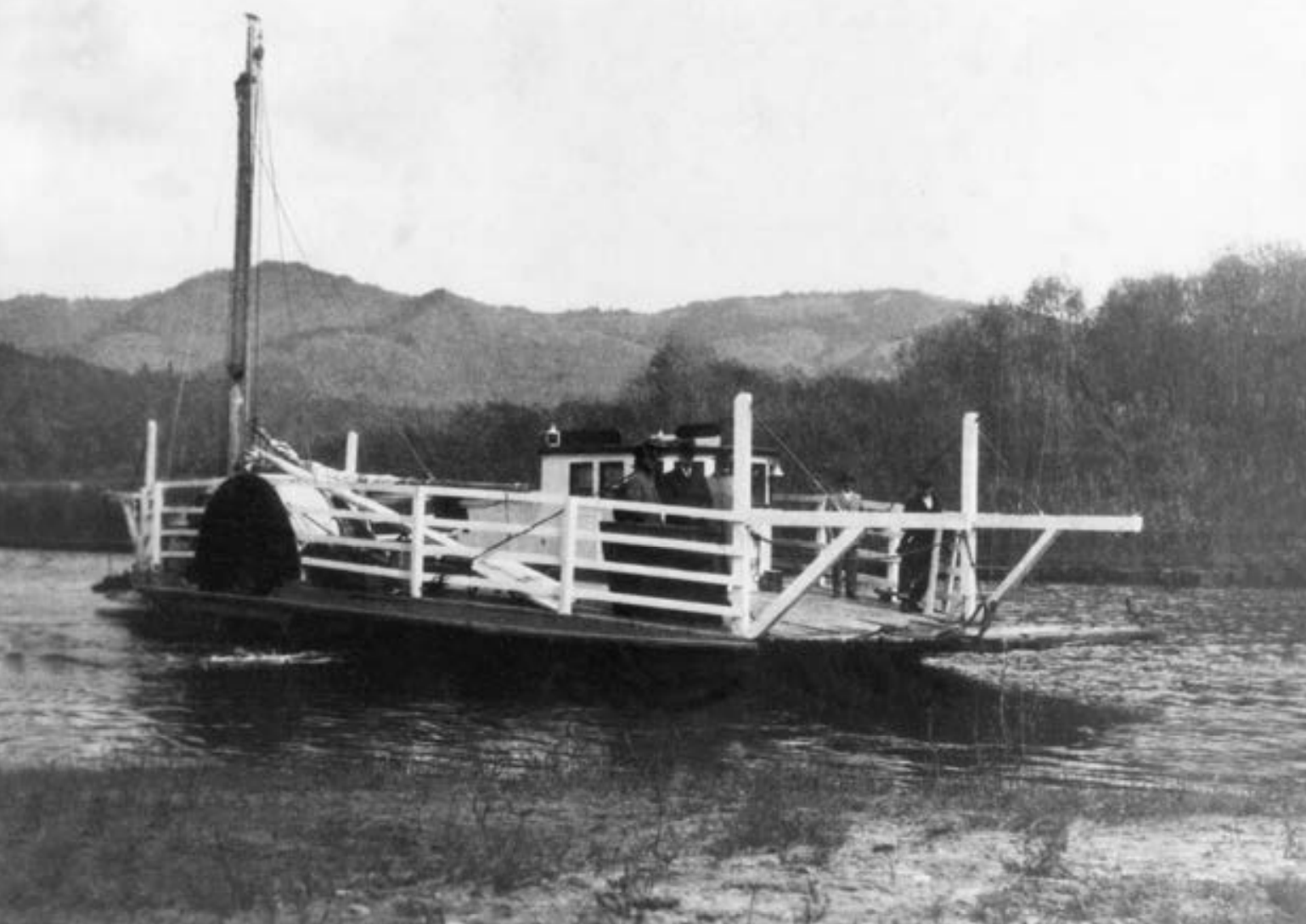
He built his own boats, and he rebuilt at least one of them more than once. One started as a towing barge. He put a mast in it and sailed it, and later turned it into a side-wheel ferry. It carried teams, horses, cattle, sheep and wagons, and finally automobiles. When there was money to be made, it also hauled lumber, freight and dynamite.
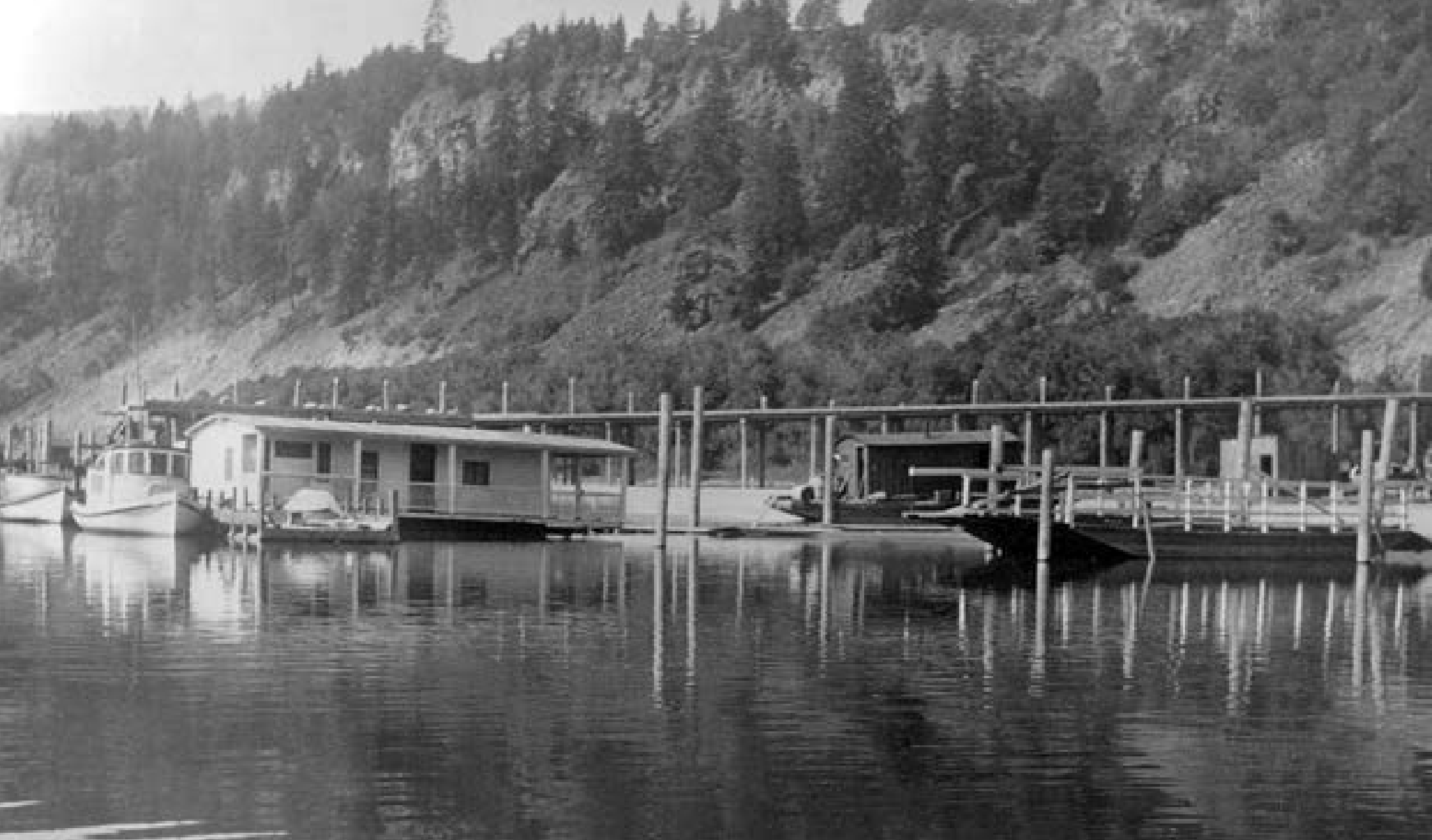
His tug, the Seal, ran on gasoline and had an enclosure to keep passengers out of the spray. It tied up at a floating dock Otis built himself. Before the dams, the river could rise and fall as much as 44 feet between low water and high water, so the dock had to float. His first run of the day left at 5 a.m.
In 1911 a new launch, the Beaver, arrived at Underwood from Astoria, "built for Olsen & Treiber." She was 51 feet long, with a 50-horsepower engine, an electric searchlight and seats for fifty passengers on the upper deck.
The records don't line up neatly on who owned what, and when. The 1911 paper says the Beaver was built for Olsen & Treiber, with Captain Olsen in charge. Winans, remembering decades later, put Otis on the other route, the Hood River-White Salmon ferry. By his own account, and the museum's, for years if you crossed to Underwood you probably crossed with Otis.
The stormy night
Around 1910, on a night of rain and wind, Otis took his lantern and walked his floating dock before bed to check that everything was tied down. The waves had carried off his gangplank, so he waded ashore in his hip boots.
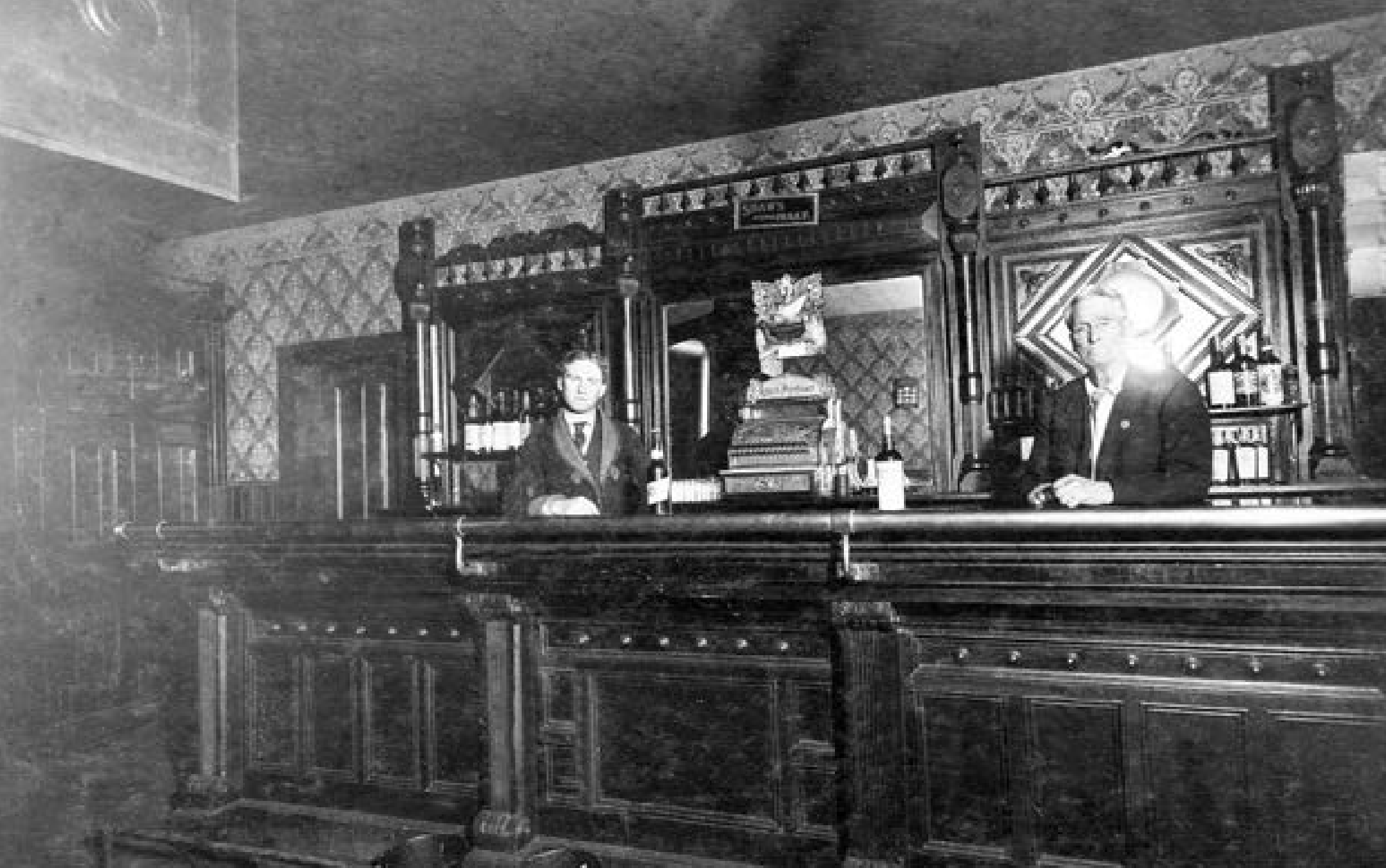
On the beach he found Lundy Stewart, pacing and staggering. Lundy was married to Nell Underwood. He tended bar at Amos Underwood's saloon and ran a livery stable Nell had built near the new railroad. The saloon was part of the Underwood Hotel, the same hotel that burned with the old town in 1946. Earlier that night, Otis said, Lundy had gotten into some kind of a brawl at the saloon. He was so drunk he couldn't talk straight. From what Otis could make out, there was something or somebody down at the steamboat dock.
Otis went to look. He saw only shipping boxes and some broken bales of hay. Then, walking back, he kicked into a man's leg in the loose hay. It was Frank Quinn, a newcomer whose sister taught school up the hill. He was unconscious, covered in blood and still breathing.
Otis carried him on his shoulders to the boat. He had a telephone line to Hood River by then, so he called ahead for a hack and for Doc Dumbold. He was afraid to leave Lundy alone on the beach, so he took him along too.
At the Mt. Hood Hotel, Otis helped the doctor cut away Quinn's clothes. He'd been stabbed many times, on his legs, arms, body and neck. Doc Dumbold sewed for what felt like hours. When Otis got sick, the doctor sent him to walk the hall and come back, because he needed him. Afterward, the doctor couldn't say whether Quinn would live until morning.
Otis walked Lundy back through the flooded cottonwoods, half carrying him in the pitch dark. Along the way Lundy pulled out a flask. Otis asked for the first drink. Lundy knew Otis didn't drink, but he handed it over, and Otis threw the bottle as far as he could.
Otis didn't take Lundy home to Nell. He thought too much of her. Lundy had never been known to be drunk around Underwood, and Otis didn't want to break her heart. So he put Lundy to bed on his houseboat, and kept him there all the next day while he ran his ferry, with the door locked and Lundy's clothes out on the boat.
That evening Otis asked him how Frank Quinn got hurt. Lundy said he didn't know a thing about it. He couldn't put it together at all.
At deep dusk, Otis walked him across the gangplank and asked if he could make it home. Lundy said he'd be all right. He started up the beach toward the road, slowly, with his head down, like a man thinking something over, until the dark took him out of sight.
In Otis's words: "Lundy Stewart has never been seen since."
"Ote, where's Lundy?"
A day or two later, Otis heard that Lundy was missing. He told no one what had happened. Not a word.
About the fourth day, Nell came down to ride across with the other passengers. As soon as the boat left the dock, she stepped into the pilot house and stood beside him. "Ote, where's Lundy?"
Otis kept his eyes on the river. At first he told her he didn't know. She said he knew something about it. He couldn't lie to her. He told her that Lundy had stayed with him a night and a day, and had started home across the beach saying he'd be all right. He left out the drinking.
Nell looked up the river out the window for a long time. Then she said, "Well, Ote, I know that you never hurt him none." She told him she was going to find Lundy. She cried the rest of the way across. Otis said he "cried in my throat."
A Mystery Left Behind
Otis never said who stabbed Frank Quinn, and neither can we. He never said whether Quinn lived. We haven't found out what happened since, and we likewise haven't found any record of Lundy turning up.
Even the year is soft. Otis said "about 1910." But a photo in the museum's file, which the museum dates to about 1913, shows Lundy with Amos at the Underwood saloon. Otis also had Lundy running the livery stable until about 1914. Something doesn't fit: a date, a label or a memory. Old photos are often dated by guesswork, and so are old memories.
Nell Underwood's Legacy
Otis called Nell Underwood "one of the greatest gals that ever lived in this country." Her family line, he said, ran back to Chief Chenoweth. She would put on her raincoat, pick up a tea kettle and some towels, and walk the muddy Underwood road to anyone who was sick. When Otis was broke, she brought him food, and once she handed him money and called it a present.
She married three times. She died in Alaska, in the 1940s by Otis's memory, at about 91. Otis and his friend Jane Bacon brought her home and buried her with her people in the Underwood Cemetery, on top of the hill.
"Nell," Otis said, "was too much of a girl to fade away."
Underwood's ferries at a glance
- 1850s to 1920s: ferries carry people, stock and wagons between Hood River and the Washington shore.
- Early days: Amos Underwood sails salmon boats between Underwood and Hood River. Harry Olsen later brings a steam tug.
- 1905 to 1920: Otis Treiber runs the Underwood ferry, by the museum's caption.
- About 1910: the stormy night. The next evening, Lundy Stewart walks up the beach and isn't seen again.
- Early 1911: the launch Beaver, built for Olsen & Treiber, arrives from Astoria.
- December 6, 1924: the Hood River-White Salmon bridge opens, and the ferries are done.
- December 7, 1978: Otis Treiber tells the story to Ivan Donaldson at Underwood.
About the sources
The heart of this story is the Otis Treiber interview, recorded at his Underwood home on December 7, 1978, by Ivan Donaldson of Stevenson, with Jane Bacon there helping, and kept in the Columbia Gorge Museum's local history collection. It is one man's memory, told almost seventy years later, and we've tried to tell it as he did. The ferry history comes from newspapers of 1907, 1911 and 1949, transcribed by Jeffrey Elmer, and from the History Museum of Hood River County. For more on the Underwood that was, see our May piece, The Town That Was: Remembering the Underwood Fire 80 Years Later.
Our family had the opportunity to learn about Otis and his legacy firsthand from his descendants, our neighbors. We're grateful for all they shared about his many contributions and projects in this area as not only a ferryboat captain, but a diesel engineer and celebrated inventor. His remarkable ferry-inspired house still is in Underwood, facing the river he loved so much. Thank you to all the locals who are our caretakers of such meaningful history.